
↓Wear-resistant spiral elbow
- →Wear problems in pneumatic transport piping
- →Wear-Resistant Helical Elbow: Solving Core Industrial Conveying Challenges Based on Fluid Mechanics
- →Spiral elbow principle
- →Technical Analysis of the Spiral Wear-Resistant Elbow
- →The appeal of wear-resistant spiral elbows
- →Engineering Theory and Application Principles of the Wear-Resistant Spiral Elbow
- →Research on simplified calculation method for pneumatic transportation
- →Spiral wear-resistant elbows solve common problems
- →Ceramic Wear-Resistant Spiral Elbow
- →Why Can M Battery Factory Avoid the Spontaneous Combustion Trap
- → Specifications of wear-resistant spiral elbows
Spiral wear-resistant elbows solve common problems
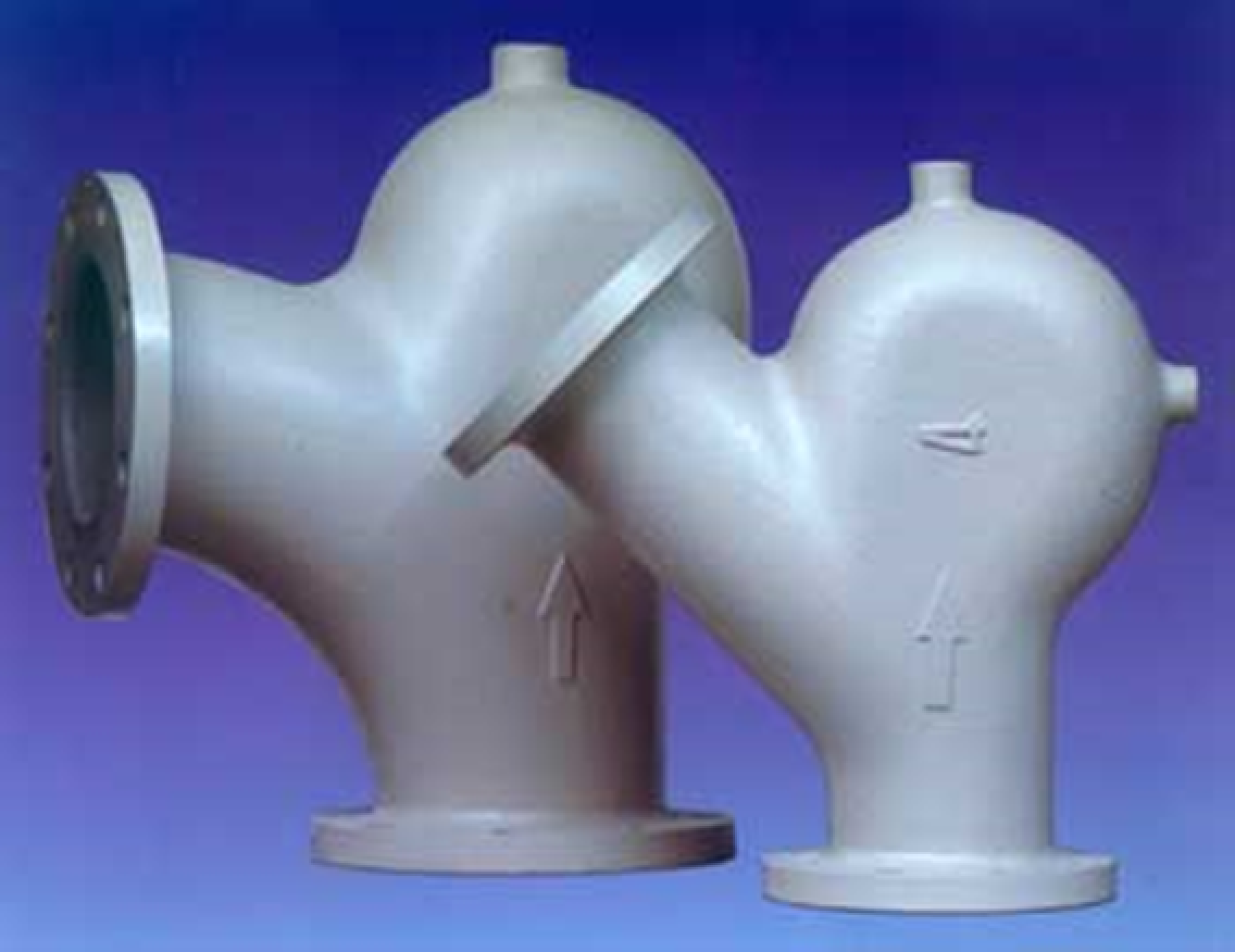
Question:
Is there a concern about clogging when using the spiral wear-resistant elbow?
Answer:
Generally, if the spiral wear-resistant elbow is used correctly, clogging should not occur. However, in certain specific situations, blockage may arise.
1. Ingress of Large Foreign Objects
If foreign objects enter the pipeline and exhibit inconsistencies in density and granularity, separation may occur during transportation. In particular, transported materials with high density and large particle size tend to settle more easily, potentially forming a plug that causes clogging. If such foreign objects accumulate inside the spiral wear-resistant elbow, continuous transport may become difficult, leading to a loss of the pressure chamber’s pressurization function and eventually causing clogging. This can also impact the service life of the elbow.
2. Effects of Humidity
When ambient humidity is high, when external moisture infiltrates, or when the pipeline’s dew point becomes abnormal, clogging may occur. If moisture binds with the transported materials, lump-like plugs can easily form. When using a spiral wear-resistant elbow, if moisture-laden transported materials adhere inside the pressurization chamber, transportation efficiency may decline.
3. Usage in High-Temperature Environments
In high-temperature environments, changes in dew point, airflow velocity, airflow volume, and air pressure can occur. Fluctuations in airflow volume are particularly critical. Typically, airflow volume is expressed as Qn (M³/min) under standard conditions (NTP). However, as temperature changes, airflow volume also fluctuates.
Conversion Formula:
Q = Qn × (273.15 + t1) / 273.15 (M³/min)
Example:
If the inlet temperature is 300°C, with a standard airflow volume of Qn = 28M³/min and airflow velocity V = 25M/S: Q = 28 × ((273.15 + 300) / 273.15) = 58.75M³/min
As this formula illustrates, the airflow volume more than doubles. If the pipe diameter remains constant while airflow volume increases, airflow velocity also rises sharply, reaching V = 52.4M/S. This increase affects pressure loss as well. For instance, if the pressure loss in a standard straight pipe under NTP conditions is ΔP1 = 6.1996mmaq/M, it increases to ΔP1n = 27.2363mmaq/M after the temperature rises.
With this rapid increase in airflow velocity, stronger impacts occur on the inner walls of the pipeline, causing transported materials to adhere more easily within the spiral wear-resistant elbow. This, in turn, can lead to clogging.
4. Instability of Primary Supply Air
When the supply-side airflow is unstable, intermittent supply may occur, causing a decrease in flow velocity and an increased likelihood of sedimentation. If this condition persists for an extended period, it can contribute to pipeline blockage along with the aforementioned issues.
Countermeasures and Prevention Strategies
By considering these risk factors, appropriate preventive measures and solutions can be implemented. Special attention should be given to the presence of foreign objects and the adhesion properties of transported materials.
When using a spiral wear-resistant elbow, in the event of an emergency stop leading to chamber clogging (a state in which transported materials completely fill the chamber), a prepurge (preferably under negative pressure) can be attempted to remove accumulated deposits.
At the inlet of the spiral chamber, the pressure is positive, and as materials enter the chamber, the area expands. However, since the pipe diameter remains constant, an increase in airflow volume leads to a rise in airflow velocity and an increase in pressure loss. Meanwhile, within the spiral chamber, airflow velocity decreases and pressure loss diminishes (refer to the previously mentioned pressure loss calculation formula).
According to Bernoulli’s Principle, when maintaining a constant flow rate while increasing the passage area, airflow velocity decreases, and pressure rises:
Q = AV
By leveraging this principle, the spiral chamber naturally forms a pressurization chamber where the pressure is slightly higher than at the inlet. Conversely, the outlet side becomes a negative pressure region. This pressure difference can be utilized to perform a prepurge, gradually pushing out accumulated transported materials and achieving a natural cleaning effect.
Conclusion
Clogging of the spiral wear-resistant elbow can occur under specific conditions. However, with proper management and countermeasures, it can be prevented. By utilizing prepurges and considering pressure loss calculations in operation, the risk of clogging can be reduced, thereby extending the service life of the elbow.